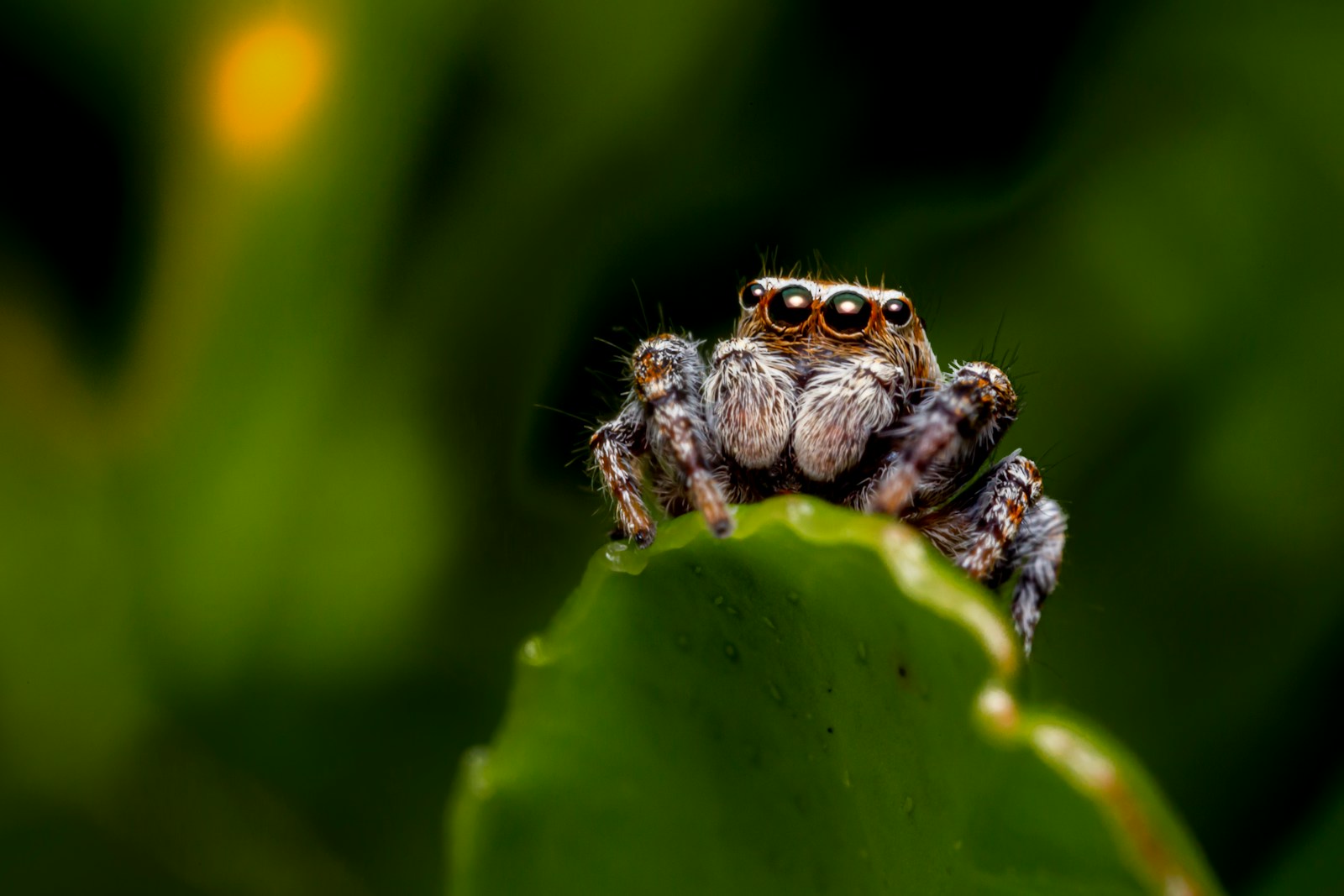
From Screaming to Squealing: My Jumping Spider Conversion Story
If you told me two years ago that I would have a spider living on my desk—voluntarily—I would have screamed and run out of the room. I was that person who made their roommate kill spiders with a shoe. I once abandoned a entire load of laundry in the basement because I saw a spider near the dryer.
Now? I have three jumping spiders. Their names are Mango, Pickles, and Sir Hops-a-Lot. I check on them every morning like I’m visiting tiny eight-legged puppies. I’ve taken more photos of them than of my own family. And when I tell people I keep spiders as pets, they say “gross” for exactly 30 seconds—until I show them a picture. Then it’s all “OH MY GOD, IT’S SO CUTE, WHERE DO I GET ONE?”
Welcome to the jumping spider revolution of 2026.
The Viral Explosion You Might Have Missed
If you’ve been on TikTok, Instagram, or YouTube in the past year, you’ve seen them. Maybe you didn’t realize what you were looking at—maybe you thought it was CGI or a plushie come to life. But those huge forward-facing eyes, fuzzy bodies, and curious head tilts are 100% real.
The numbers are staggering:
- #jumpingspider on TikTok: 4.2 billion views (as of January 2026)
- #phidippusregius (the most popular pet species): 847 million views
- “Jumping spider” Google searches: Up 320% since 2023
This isn’t a niche hobby anymore—jumping spiders are becoming as mainstream as betta fish or hermit crabs. Pet stores are starting to stock them. Breeders have waitlists. And the community is exploding with people who never thought they’d be “spider people.”
So what changed? How did spiders go from nightmare fuel to the “it” pet of 2026? Let me show you exactly why these tiny creatures have captured the internet’s heart.
1. They Are Literally “Octo-Kittens” (And Yes, They Play)
Forget everything you think you know about spiders. Jumping spiders (family Salticidae) are not like other spiders. They don’t build webs and wait. They don’t skitter away when you approach. They don’t have that creepy, alien energy that makes most people’s skin crawl.
Instead, they behave like miniature cats with eight legs.
They Chase Laser Pointers (I’m Not Joking)
The first time someone showed me a video of a jumping spider chasing a laser pointer dot, I thought it was fake. Then I tried it with my own spider, Mango, and I literally gasped.
She tracked it. Not randomly—deliberately. Her two massive forward-facing eyes (called “principal eyes”) locked onto the red dot like a tiny predator. She crouched, wiggled her butt (yes, they do that before pouncing), and leaped three inches to attack it. When the dot moved, she spun around, head-tracked it, and pounced again.
I played with her for 15 minutes. She never got bored. She just kept hunting the dot with the same intensity my friend’s cat has. It was the most un-spider-like thing I’d ever witnessed.
Why this matters: This behavior proves jumping spiders have complex vision and object permanence. They’re not reacting to vibrations or pheromones—they’re seeing the dot, calculating distance, and planning an attack strategy. That’s mammal-level cognitive processing in a creature smaller than your thumbnail.
They Are the Only Spiders That Turn Their Heads to Look at You
Most spiders have eight eyes scattered around their head and no real “forward vision.” They sense the world through vibrations, chemical signals, and blurry light detection. They don’t “look” at you—they just react to your movement.
Jumping spiders are different. Their two massive principal eyes give them vision sharper than a cat’s—they can see detail, color, and movement with startling precision. And because their eyes are mounted on a mobile structure inside their head capsule, they can shift their gaze without moving their body.
This creates the unsettling (but adorable) effect of a spider watching you. When you move your hand, their eyes track it. When you lean closer to their enclosure, they turn to face you. It feels like eye contact. It feels like curiosity.
The first time Mango tilted her head and stared at me, I felt a weird emotional reaction. It was the same feeling I get when a dog tilts its head in confusion. “Wait,” I thought, “is this spider… trying to understand me?”
The answer, according to arachnologists, is kind of, yes. Jumping spiders assess threats, recognize individual humans, and even seem to display something resembling “curiosity” when exposed to novel objects. They’re not conscious in the way mammals are, but they’re way more aware than any other invertebrate.
The “Head Tilt” That Breaks the Internet
This is the behavior that converts arachnophobes into jumping spider owners.
Here’s what happens: You approach the enclosure. The spider notices you (those big eyes see EVERYTHING). Instead of fleeing like a normal spider, it turns toward you. Then—and this is the part that gets people—it tilts its entire body to the side slightly, like a confused puppy trying to process what you are.
It’s so unexpectedly mammalian that your brain short-circuits. “Wait, spiders don’t do that. That’s not spider behavior. That’s… cute?”
I’ve shown this to at least a dozen arachnophobic friends. Every single one had the same reaction:
- “Ew, no, get it away from me”
- (I show them a video of the head tilt)
- “Oh my god, it’s looking at me”
- “Wait… why is that kind of adorable?”
- “Okay, can I see it in person?”
Three of those friends now own jumping spiders. The head tilt is that powerful.
2. The “Lucas the Spider” Connection (They Really Look Like That)
If you’ve been on YouTube anytime since 2017, you’ve probably seen Lucas the Spider—the animated character with huge eyes, a tiny fuzzy body, and an adorable voice who just wants to be your friend.
Here’s what most people don’t realize: Lucas is based on a real jumping spider.
The Real-Life “Lucas” (Phidippus audax)
Lucas was created by animator Joshua Slice, who modeled the character after Phidippus audax (the Bold Jumping Spider), one of the most common jumping spider species in North America. The big eyes, fuzzy pedipalps (those “mustache” appendages near the mouth), and stocky build are all anatomically accurate.
When people watch Lucas and think “that’s unrealistically cute,” they’re wrong. Real jumping spiders look like that. The only thing Joshua exaggerated was the voice—real jumping spiders don’t squeak (they’re silent hunters).
The “Fuzzy Mustache” That Makes Them Look Polite
One of the most charming features of jumping spiders is their pedipalps—short, fuzzy leg-like appendages near their mouth that they use to manipulate food and communicate. In species like Phidippus regius (Regal Jumping Spider), these pedipalps are covered in dense white or orange hairs.
The result? They look like they’re wearing a fuzzy mustache or holding tiny pompoms. When they groom themselves (which they do constantly—spiders are very clean), they pull their pedipalps across their face like someone stroking a beard.
It’s absurdly gentlemanly. People describe them as “polite,” “distinguished,” or “like a tiny Victorian gentleman.” My friend’s 6-year-old daughter calls them “fancy spiders.”
Big Anime Eyes That Pierce Your Soul
Let’s talk about those eyes—because they’re the main reason jumping spiders photograph so well.
The two principal eyes take up about 50% of the spider’s face. They’re positioned forward like human eyes, which triggers our social instincts. When we see forward-facing eyes, we interpret it as “this creature is like me.”
But here’s the wild part: those eyes don’t have pupils. The dark spot you see moving around inside the eye isn’t a pupil—it’s the retina layer visible through the semi-transparent lens. The retina is mounted on a stalk that can move independently, which is why it looks like the spider is “looking” in different directions.
The effect is uncanny. In photos, jumping spiders look like Studio Ghibli characters—huge, expressive eyes that seem to hold emotion. People see a jumping spider and their brain screams “BABY CREATURE, MUST PROTECT.”
This is why jumping spider posts go viral on Instagram. They photograph like no other pet invertebrate. Tarantulas look alien. Beetles look armored. But jumping spiders? They look relatable.
3. Their Homes Are “Cottagecore” Dreams (Not Scary Cages)
One of the biggest misconceptions about keeping spiders is that you need some kind of sterile, clinical setup—plastic bins, harsh lights, utilitarian containers.
The jumping spider community threw that idea out the window. Instead, people are building enclosures that look like something out of a Studio Ghibli film or a Pinterest “fairy garden” board.
The Aesthetic: Moss Cottages and Walnut Shell Hides
Search “jumping spider enclosure” on Instagram or TikTok, and you’ll find:
- Tiny moss-covered landscapes with miniature mushrooms
- Walnut shell “houses” with cut-out windows and doors
- Acorn cap “water dishes”
- Driftwood branches styled like miniature trees
- Live plants (Fittonia, Peperomia) creating a lush jungle
- Leaf litter arranged like a forest floor
This isn’t just functional—it’s art. People are spending hours crafting these setups not because jumping spiders need them (they’re perfectly happy in a simple jar with a stick), but because it’s fun. It’s like owning a living diorama.
The “Cottagecore” Appeal
If you’re not familiar with the aesthetic movement, “cottagecore” is all about romanticizing rural life, nature, simplicity, and handmade crafts. Think Beatrix Potter illustrations, mushroom foraging, and cozy forest vibes.
Jumping spider enclosures fit this aesthetic perfectly. They’re small (most are 6″x6″x8″), so they don’t dominate your space. They’re filled with natural materials—moss, bark, leaves, stones. And the spider itself becomes the tiny “woodland creature” living in this miniature world.
The result? Owning a jumping spider feels like owning a tiny piece of a fantasy forest. It’s the same emotional appeal as terrariums or bonsai trees—a self-contained world you can tend to and admire.
My friend described it as “having a pet Totoro.” And honestly? That’s accurate.
The Social Media Effect
Because these enclosures are so photogenic, they perform incredibly well on visual platforms. A well-shot photo of a jumping spider in a mossy setup gets thousands of likes. TikTok videos of keepers redecorating their spider’s home rack up millions of views.
This creates a positive feedback loop:
- Someone posts a cute spider setup
- Non-spider-people see it and think “That’s actually adorable”
- They research jumping spiders
- They discover they’re easy, cheap, and legal
- They buy one
- They post their own setup
- The cycle repeats
This is how hobbies go mainstream in 2026—through visual virality.
4. They Are the Easiest Pet You Will Ever Own (Seriously)
Let me lay out the actual requirements for keeping a jumping spider, because I think this is where people realize “Wait, I could actually do this.”
Space: The Size of a Large Coffee Mug
Most jumping spider species (like Phidippus regius) need an enclosure that’s 6″x6″x8″ or smaller. That’s a cube the size of a large coffee mug or a shoebox. You could fit five jumping spider enclosures in the space one hamster cage occupies.
My setup: I use a 6″x6″x8″ acrylic cube that sits on the corner of my desk next to my monitor. It doesn’t block my view. It doesn’t smell. It doesn’t make noise. It’s just… there, being adorable.
If you live in a tiny apartment, dorm room, or anywhere with limited space, jumping spiders are perfect. You don’t need to sacrifice a full shelf or corner of your room.
Food: One Fly Every 3 Days (That’s It)
Jumping spiders eat live insects—typically fruit flies, house flies, or small crickets. An adult Phidippus regius eats about:
- 2-3 fruit flies every 3 days, OR
- 1 small house fly every 3 days, OR
- 1 cricket (1/4″ size) once a week
That’s shockingly low maintenance. Compare that to:
- A hamster: Daily feeding, weekly cage cleaning
- A betta fish: Daily feeding, weekly water changes
- A cat: Daily feeding, litter box scooping, vet visits
My feeding routine: I keep a culture of flightless fruit flies (Drosophila melanogaster) in a jar on my shelf. Every three days, I tap a few flies into Mango’s enclosure. She hunts them immediately (it’s like watching a nature documentary). The whole process takes 30 seconds.
Cost of food: A fruit fly culture costs $8-12 and produces hundreds of flies for 4-6 weeks. I spend about $5/month feeding three jumping spiders. That’s less than a single Starbucks latte.
Cost: Cheaper Than a Hamster (Way Cheaper)
Here’s the full startup cost breakdown:
| Item | Cost |
|---|---|
| Jumping spider (Phidippus regius) | $15-40 |
| 6″x6″x8″ enclosure | $8-15 |
| Substrate (coco fiber) | $4 |
| Decor (sticks, moss, hide) | $5-10 |
| Fruit fly culture | $10 |
| Misting bottle | $3 |
| TOTAL | $45-82 |
Compare that to a hamster:
- Hamster: $15-25
- Cage: $40-80
- Bedding: $10-15/month
- Food: $10-15/month
- Wheel, hideouts, toys: $30+
- Total first year: $300+
Or a betta fish:
- Fish: $5-30
- Tank (5+ gallons): $30-60
- Filter, heater: $30-50
- Substrate, plants: $20+
- Food: $8/month
- Total first year: $200+
Jumping spiders are objectively the cheapest pet with a nervous system. And there are no recurring vet bills, no bedding to replace weekly, no filters to clean. Once you have the setup, your only cost is food at $5/month.
Maintenance: 5 Minutes Per Week
My actual weekly care routine:
- Monday: Feed (30 seconds)
- Wednesday: Feed (30 seconds)
- Friday: Feed + mist enclosure (2 minutes)
- Sunday: Check substrate moisture, remove any uneaten prey (2 minutes)
Total time per week: 5-7 minutes.
That’s less time than brushing your teeth daily. I spend more time deciding what to watch on Netflix than I do caring for my spiders.
No weekends off needed. When I travel, I just feed them heavily before I leave and add an extra mist. They’re fine for 5-7 days alone. Try doing that with a dog.
5. They Cure Arachnophobia (Real Stories)
This is the part that surprised me most—jumping spiders are being used as informal “exposure therapy” for arachnophobia.
My Story: From Shoe-Killer to Spider-Mom
I wasn’t always a “spider person.” I was genuinely afraid of spiders for most of my life. Not “uncomfortable”—afraid. I’d leave rooms if I saw one. I made other people kill them. I once threw a book at a wall because a spider was on it (I missed, the spider lived, I felt stupid).
What changed? A friend showed me a video of a jumping spider on TikTok. It was doing the head tilt thing while someone held a Q-tip near it. The spider was reaching out with its tiny fuzzy arms to touch the Q-tip, like it was curious.
“That’s not a spider,” I thought. “That’s some kind of… tiny alien puppy.”
I watched 40 more videos that night. Then I researched. Then I found a local breeder. Then I bought Mango.
The first time I held her (on my hand, voluntarily), I expected to panic. Instead, I felt… calm. She was so small. So fuzzy. So curious. She walked across my palm, stopped, looked up at me with those big eyes, and just… existed.
I realized: I wasn’t afraid of her because she didn’t behave like a “spider.” She didn’t skitter. She didn’t flee. She didn’t hide in dark corners. She was just a tiny, slightly fuzzy creature exploring the world.
Other People’s Testimonials (From Reddit and TikTok)
From r/jumpingspiders:
“I’ve been terrified of spiders my whole life. Like, screaming, crying, the whole thing. My therapist suggested exposure therapy, but I couldn’t even look at pictures. Then my daughter showed me a jumping spider video. I watched it for 5 seconds before realizing it was a spider. By then, I’d already thought it was cute. Got one three months ago. Still don’t like other spiders, but I love my jumper.” – u/formerly_terrified
From TikTok comments:
“I used to kill every spider I saw. Now I have 6 jumping spiders and I relocate house spiders outside instead of killing them. Jumpers taught me that spiders aren’t all scary.” – @spider_convert_2025
From Instagram:
“My 8-year-old was terrified of spiders. We got a jumping spider to help her face her fear gradually. Now she asks to hold him every day and wants to be an entomologist when she grows up.” – @parent_of_future_scientist
Why It Works (The Psychology)
Jumping spiders bypass the typical “spider triggers” that activate arachnophobia:
| Typical Spider (Fear Trigger) | Jumping Spider (No Trigger) |
|---|---|
| Eight eyes scattered randomly (alien) | Two huge forward-facing eyes (mammal-like) |
| Unpredictable, jerky movement | Slow, deliberate, trackable movement |
| Hides in dark corners (ambush predator) | Sits in open, curious about surroundings |
| Makes webs (association with “trapped”) | Doesn’t make webs, free-roaming hunter |
| Skitters away rapidly (startling) | Turns toward you, assesses, responds calmly |
Your brain’s fear response is based on pattern recognition. Jumping spiders break enough of those patterns that they register as “not a spider” emotionally, even though you know intellectually that they are.
It’s like the “uncanny valley” in reverse. Instead of something almost-human feeling creepy, something almost-not-a-spider feels cute.
The Viral Moments That Made Jumping Spiders Mainstream
Let me show you the specific content that broke jumping spiders into the mainstream consciousness:
1. “Jumping Spider High-Fives Human” (38M views on TikTok)
A user trained their jumping spider to “high-five” a finger by associating the gesture with food. The video shows the spider reaching up with one leg to tap the person’s finger. Comments were 90% “I NEED ONE.”
2. “Spider Plays Peek-a-Boo” (52M views on YouTube Shorts)
A jumping spider hides behind a leaf, peeks out, then ducks back when the owner waves. It looks exactly like a kitten playing. The top comment: “This cured my arachnophobia in 12 seconds.”
3. “Building a Fairy Garden for My Spider” (102M views on TikTok)
A time-lapse of someone constructing an elaborate moss terrarium with miniature mushrooms, a tiny door, and a “mailbox” (actually a hollowed acorn). The spider explores the setup at the end, pausing to “smell” (taste) the new decorations with its pedipalps.
This video wasn’t even about the spider—it was about the craft. But it introduced millions of people to the concept of “spiders as cute pets.”
4. Lucas the Spider (2.8B total views across all platforms)
Joshua Slice’s animated series remains the gateway drug. Kids watch Lucas, beg their parents for a “spider like Lucas,” parents research, discover jumping spiders are real and easy, and boom—new hobbyist.
Still Not Convinced? The “30-Second Test”
If you’re still on the fence, I challenge you to do this:
- Go to YouTube
- Search “Jumping Spider High Five”
- Watch the first video (it’s 11 seconds long)
- Notice your emotional reaction
If you smiled, even a little, you’re already halfway to wanting one.
If you didn’t smile, search “Jumping Spider Head Tilt” and try again. If you still don’t feel anything, jumping spiders might not be for you—and that’s okay. Not every pet is for everyone.
But I’m willing to bet that 80% of people reading this will watch those videos and think “…okay, that’s actually kind of adorable.”
Conclusion: Small, Cheap, and Surprisingly Affectionate
Jumping spiders are the pet nobody saw coming. They’re:
- Cheaper than hamsters
- Easier than fish
- Smaller than hermit crabs
- More interactive than ants
- Cuter than… honestly, most traditional pets
They’ve taken over social media not through some coordinated marketing campaign, but through pure “holy crap, look at this tiny fuzzy creature with huge eyes” virality.
They’re not for everyone—if you’re deeply uncomfortable with anything that has eight legs, that’s valid. But if you’re curious, even slightly, I encourage you to watch a few videos, read some beginner guides, and see if that curiosity grows.
Because here’s the thing: I never thought I’d be a “spider person” either. And now I have three on my desk, I’ve joined four online communities, and I’ve convinced six friends to get their own.
The jumping spider revolution is real. And it’s adorable.
Ready to take the plunge? Check out our Beginner’s Guide to Jumping Spiders where we walk you through species selection, enclosure setup, feeding, and everything else you need to know to start your journey into the weirdest, cutest hobby you never knew you wanted.
Still skeptical? Join r/jumpingspiders and just lurk for a week. Read the stories. Look at the photos. Watch people fall in love with these tiny creatures in real-time. You’ll either walk away thinking “not for me” (totally fair), or you’ll walk away thinking “…okay, where do I buy one?”
Either way, you’ll never look at spiders the same way again. And honestly? That’s a good thing.
Welcome to the puppy spider side. The head tilts are real over here. 🕷️✨